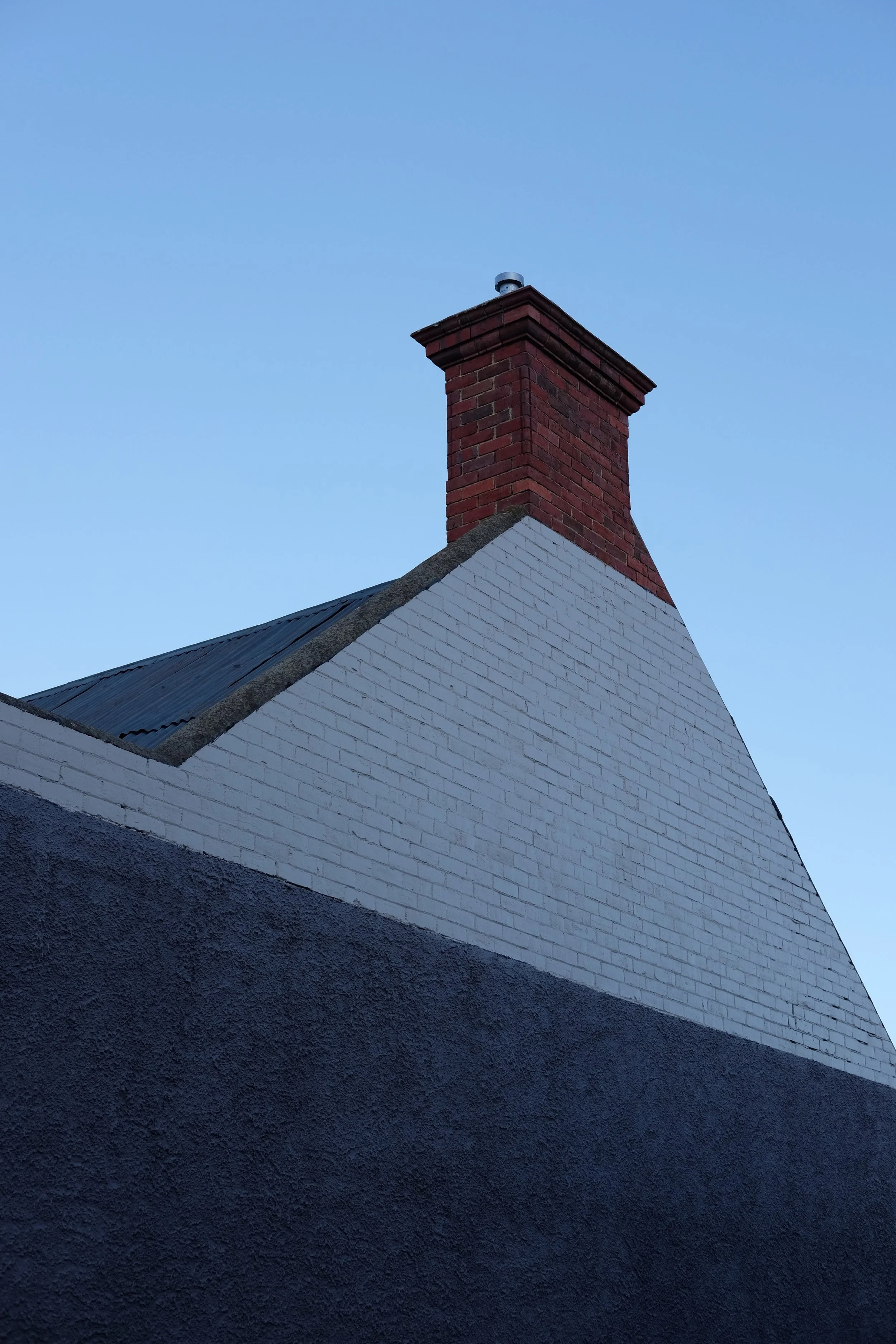
Photographic Archival Recording as a Condition of Development Consent
By Charlotte Simons, Director and former Council Heritage Officer ·
Most owners encounter Photographic Archival Recording (PAR) for the first time in the same way: they receive their development consent, scan to the conditions, and stop on a clause that says something like ‘a Photographic Archival Recording is to be prepared in accordance with the Heritage Council of NSW guidelines and lodged with Council prior to the issue of the Construction Certificate.’ This article explains what that condition is asking for, when you have to act on it, and what to do next.
When Council Imposes a PAR Condition
Councils and Heritage NSW commonly attach a PAR condition to a development consent in the following circumstances:
- —Partial demolition of a heritage item or contributory building — for example, removing an outbuilding, demolishing a rear lean-to, or removing a chimney.
- —Removal or replacement of significant fabric — original timber windows, sandstone or face-brick walls, cast-iron lacework, slate roofing, decorative ceilings.
- —Internal reconfiguration that affects the original plan form — merging rooms, removing fireplaces, opening up load-bearing walls in a building of significant planning-form heritage.
- —Demolition of a contributory building within a Heritage Conservation Area, even where the building itself is not individually listed.
- —Major works to a State Heritage Register item, where Heritage NSW typically requires a comprehensive recording.
Reading the Condition
The exact wording varies between councils, but most PAR conditions specify three things:
- —The standard. Almost always ‘the Heritage Council of NSW guidelines’ — in 2026 this means the 2023 guideline for archival recordings as a condition of consent, which replaced the 1998 and 2006 publications.
- —The level. Sometimes called out explicitly (‘measured archival recording’, ‘comprehensive archival recording’); other times the level has to be inferred from the works themselves and the heritage significance of the item.
- —The deadline. Most commonly ‘prior to the issue of the Construction Certificate’ or ‘prior to the commencement of any works’. Some conditions require lodgement to a specific archive (the State Library of NSW, Council’s heritage archive, or both).
If the condition does not specify the level, the level has to be chosen to match the works. A like-for-like replacement is usually a simple record; partial demolition of a heritage item is usually a measured record; demolition of a contributory building or major works to an SHR item is usually a comprehensive record. If you are unsure, ask Council’s heritage officer to confirm in writing — one email saves an entire re-lodgement.
When the PAR Must Be Done
The PAR is almost always a deferred condition — that is, you are not required to do it before the consent is issued, but you are required to do it before some downstream milestone. The two most common deadlines are:
- —Prior to Construction Certificate. The certifier will not issue the CC until the PAR is lodged. This is the cleanest deadline because the certifier will pull the file and check it.
- —Prior to commencement of works. Slightly later than the CC. The risk is that the builder turns up on site without the PAR done and either has to wait or proceeds non-compliantly.
Either way, two to six weeks is a sensible lead time for the recording. Build it into the project programme as a discrete step, not an afterthought.
What Happens If You Don’t Comply
A consent condition has the same legal force as the consent itself. Failing to comply with a PAR condition before commencing works is a breach of consent that can result in stop-work orders, fines, and in serious cases prosecution under the Environmental Planning and Assessment Act 1979 or, for SHR items, the Heritage Act 1977. Practically, the most common consequence is a stop-work order issued by Council until the PAR is lodged retrospectively — which is more expensive than doing it on time, because the building has already been disturbed and significant fabric may be inaccessible or already removed.
Next Steps
If you have just received a consent with a PAR condition, send it to a heritage consultant with the property address and any existing architectural drawings. From there, the consultant can confirm the level, schedule a site visit, and produce a fixed fee. For a more detailed breakdown of how PARs are priced see our PAR cost article; for the question of whether to engage a heritage consultant or a photographer, see our consultant-vs-photographer comparison.
Contact our team to discuss your heritage project requirements.
Get in Touch